

Breaking into the music industry has always been competitive – but today, it’s more crowded than ever.
Millions of artists are releasing music globally, all competing for attention on the same platforms.
So the real question is:
🧠 How hard is it to make it in the music industry?
In this guide, we’ll break down:
- ➜ what “making it” actually means
- ➜ the real numbers behind success
- ➜ what separates the artists who break through
The Reality: How Hard Is It to Make It In the Music Industry?
The short answer:
👉 very difficult – but not impossible
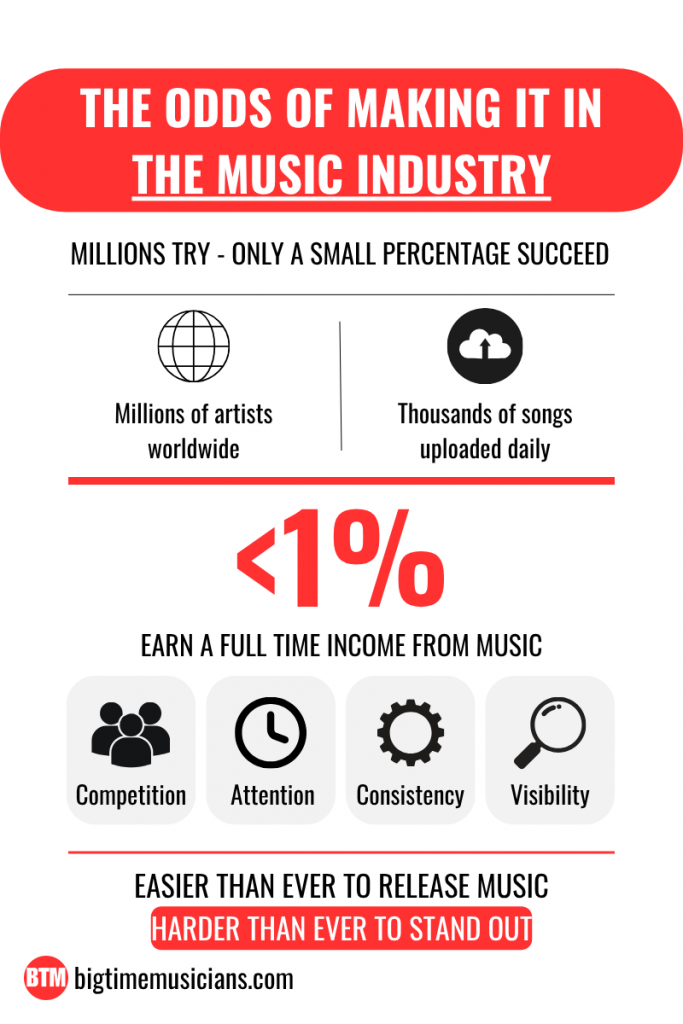
There are now millions of artists worldwide, with streaming platforms making it easier than ever to release music.
But that accessibility comes with a trade-off:
👉 more opportunity = more competition
Some industry data highlights how tough it is to earn meaningful income from music alone.
Many artists generate little to no revenue from streaming platforms.
Source: https://loudandclear.byspotify.com/
At the same time, things are shifting.
The number of independent, self-releasing artists continues to grow rapidly, giving more people access to a global audience.
The path is evolving – but the competition hasn’t gone away!
What Does “Making It” Actually Mean?
Before talking about odds, you need to define success.
Because “making it” doesn’t mean the same thing to everyone.
For some artists, it means:
- ➜ global fame
- ➜ chart success
- ➜ major label deals
For others, it might be:
- ➜ earning a full-time income from music
- ➜ building a loyal fanbase
- ➜ touring consistently
- ➜ releasing music regularly
The definition you choose completely changes the odds.
Understanding the Odds
There’s no single statistic that fully captures success in music.
But the overall picture is clear:
➤ only a small percentage of artists reach a sustainable level
There are now millions of musicians releasing music globally – all competing for the same attention.
Some industry estimates suggest:
Under 1% of artists earn a full-time living from music
Source: https://www.midiaresearch.com/blog
Rather than focusing on one number, the key takeaway is:
- ➜ more artists than ever are releasing music
- ➜ barriers to entry are lower
- ➜ attention is harder to earn
Success is possible – but increasingly competitive.
If you’re curious about the scale of official musicians, we’ve broken it down here:
👉 How many official musicians are there in the world?
What Actually Impacts Your Chances?
Success rarely comes down to one factor.
It’s usually a combination of:
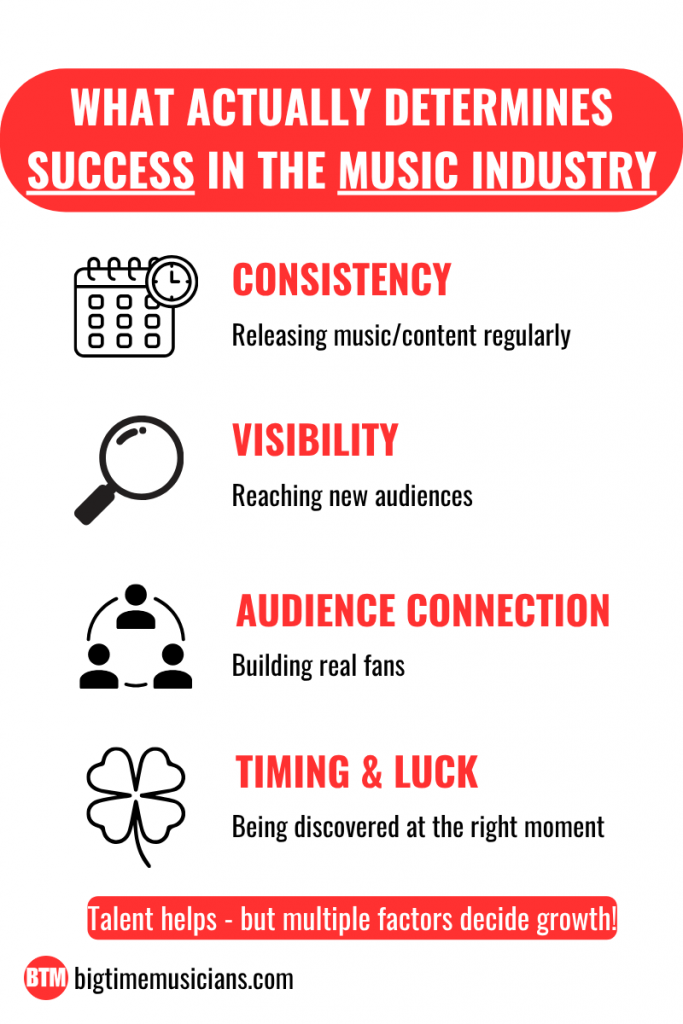
- ➜ consistency (releasing and improving over time)
- ➜ visibility (getting seen)
- ➜ audience connection (real fans, not just streams)
- ➜ timing and luck
Talent matters, but it’s only part of the picture.
Talent vs Hard Work
This debate comes up constantly.
But in reality, it’s not one or the other.
Talent gives you a starting point, but hard work determines how far you go.
HARD WORK BEATS TALENT, WHEN TALENT DOESN’T WORK HARD
There are countless talented artists who never build careers.
And many others who improve through consistency and discipline.
Success usually comes from:
- ➜ developing your skills
- ➜ releasing consistently
- ➜ learning what works
- ➜ adapting over time
As David Byrne said:
“You have to practice your talents.”
Why Most Artists Don’t Break Through
It’s easy to assume the main barrier is talent – but that’s rarely the full story.
In reality, most artists don’t break through because of a combination of factors:
- ➜ inconsistency (releasing too infrequently)
- ➜ lack of visibility (not reaching new audiences)
- ➜ weak branding or identity
- ➜ giving up too early
Another major factor is volume.
With thousands of songs uploaded daily, even strong music can go unnoticed without a strategy behind it.
👉 Good music is essential – but it’s not enough on its own.
Artists who succeed tend to:
- ➜ stay consistent over time
- ➜ adapt to what works
- ➜ build direct relationships with listeners
The difference is rarely overnight talent, it’s long-term persistence and positioning.
The Role of Networking and Exposure
Networking still matters – but it looks different today.
In the past, it was mostly:
- ➜ labels
- ➜ producers
- ➜ radio
Now, exposure can come from:
- ➜ social media
- ➜ short-form content
- ➜ direct fan engagement
👉 You no longer need permission to get started!
But relationships still matter.
Whether it’s:
- ➜ collaborators
- ➜ creators
- ➜ fans
Growth often comes through connection.
A More Realistic Take
The music industry is no longer just about getting signed.
There are now multiple paths:
- ➜ independent releases
- ➜ content-driven growth (TikTok / YouTube etc)
- ➜ live performance
- ➜ niche audiences
The challenge has shifted from access to attention.
You Might Like

The Rise of Independent Artists
One of the biggest shifts in the industry is the rise of independent artists.
In the past, labels controlled:
- ➜ distribution
- ➜ marketing
- ➜ access
Today, artists can release music globally without them.
This has changed everything.
➤ more artists can release music
➤ more artists are competing
Independent artists now have:
- ➜ creative control
- ➜ ownership
- ➜ direct access to fans
But also take on:
- ➜ marketing
- ➜ branding
- ➜ financial risk
The barrier to entry is lower – but success still takes work.
Does Being Independent Increase Your Chances of ‘Making It’?
In some ways, yes.
Artists no longer need:
- ➜ label approval
- ➜gatekeepers
- ➜ industry connections
They can build audiences directly.
But that creates a new challenge:
Attention is now the hardest thing to earn
With thousands of songs released daily, simply uploading music isn’t enough.
If you’re curious about the scale of official songs, we’ve broken it down here:
👉 How many official songs are there in the world?
Navigating the Digital Music Industry
The digital shift has changed how careers are built.
Artists now need to combine:
- ➜ music
- ➜ content
- ➜ audience interaction
- ➜ platform strategy
Streaming gives reach.
Social media builds connection.
👉 Today’s artist is both a musician and a creator
The Reality of the Digital Era
The digital age has made music more accessible – but also more competitive.
There are now:
- ➜ millions of artists
- ➜ constant content
- ➜ limited attention
This creates two main challenges:
Discoverability
Standing out is harder than ever
Income
Streaming alone rarely provides stability
Because of this, most artists rely on:
- ➜ live shows
- ➜ merchandise
- ➜ multiple income streams
What This Means for Your Chances of Making It in the Music Industry
The path has changed – but the difficulty hasn’t disappeared.
➤ It’s no longer about getting access
➤ It’s about building and keeping attention
Success now requires:
- ➜ time
- ➜ consistency
- ➜ strategy
- ➜ adaptability
What Success Looks Like Today
Success in the music industry doesn’t look the same as it did 10–20 years ago.
In the past, “making it” usually meant:
- ➜ getting signed to a major label
- ➜ chart success
- ➜ mainstream recognition
Today, success is far more varied.
Many artists now build sustainable careers without ever becoming globally famous.
For example, an artist can:
- ➜ earn consistent income from a dedicated fanbase
- ➜ sell out small to mid-sized venues
- ➜ generate revenue through merch, sync deals, and content
- ➜ build a strong online presence
This is often referred to as a “middle-class musician” career.
This shift is important.
Because it means success is no longer all-or-nothing.
👉 You don’t need millions of fans – you need the right audience
For many artists, this is a more realistic and achievable path.
Final Thoughts
So, how hard is it to make it in the music industry?
➤ It’s difficult – because competition is higher than ever
But:
➤ it’s also more open than ever!
There’s no single path anymore.
Artists can build careers through:
- ➜ streaming
- ➜ content
- ➜ live performance
- ➜ niche audiences
The key difference today:
Success is no longer controlled – but it still has to be earned.
Frequently Asked Questions
How hard is it to make it in the music industry?
It’s very competitive. With millions of artists releasing music globally, only a small percentage reach a level where they can earn a full-time income. However, success is still possible with consistency, strong audience engagement, and the right strategy.
What percentage of musicians become successful?
There’s no exact figure, but most industry estimates suggest that well under 1% of musicians achieve long-term financial success. The definition of “success” can vary, which makes it difficult to measure precisely.
Can you make it in the music industry without a record label?
Yes. Many artists now build successful careers independently using streaming platforms and social media. While record labels can still provide advantages, they are no longer the only path to success.
Do independent artists have a better chance of success?
Independent artists have more access than ever before, but that doesn’t necessarily mean higher success rates. The main advantage is control – over music, branding, and audience – but competition is also much higher.
How do musicians actually make money today?
Most musicians earn income from a mix of sources, including:
- ➜ streaming
- ➜ live performances
- ➜ merchandise
- ➜ brand deals
- ➜ licensing
Streaming alone is rarely enough for most artists.
Is talent enough to succeed in music?
No. Talent helps, but it’s only one part of the equation. Success usually depends on a combination of:
- ➜ consistency
- ➜ visibility
- ➜ audience connection
- ➜ timing
How long does it take to make it in the music industry?
There’s no fixed timeline. Some artists break through quickly, while others take years to build momentum. In most cases, success comes from long-term consistency rather than overnight results.
Is the music industry more competitive than before?
Yes. The rise of streaming and digital distribution has made it easier for artists to release music, which has significantly increased competition. Standing out now requires more than just good music.
How many official musicians are there in the world?
There are millions of musicians globally, with more entering the industry every year through streaming platforms and digital distribution. You can read more in our breakdown of how many official musicians there are worldwide.